Breaking News



Popular News


Enter your email address below and subscribe to our newsletter
Smart Discovery Store
The evolution of drones has largely focused on small, agile aircraft designed for aerial photography and entertainment. Heavy-lift industrial drones, however, sit in a different category. They are built to move weight, withstand severe environments, automate physically demanding work, and expand aerial capabilities into new industries. Their arrival marks a shift in how businesses transport goods, manage farms, and service remote infrastructure. Modern heavy-lift systems integrate advanced navigation, large-capacity batteries, winch mechanisms, precision spraying modules, and safety redundancies that extend their use far beyond consumer expectations.
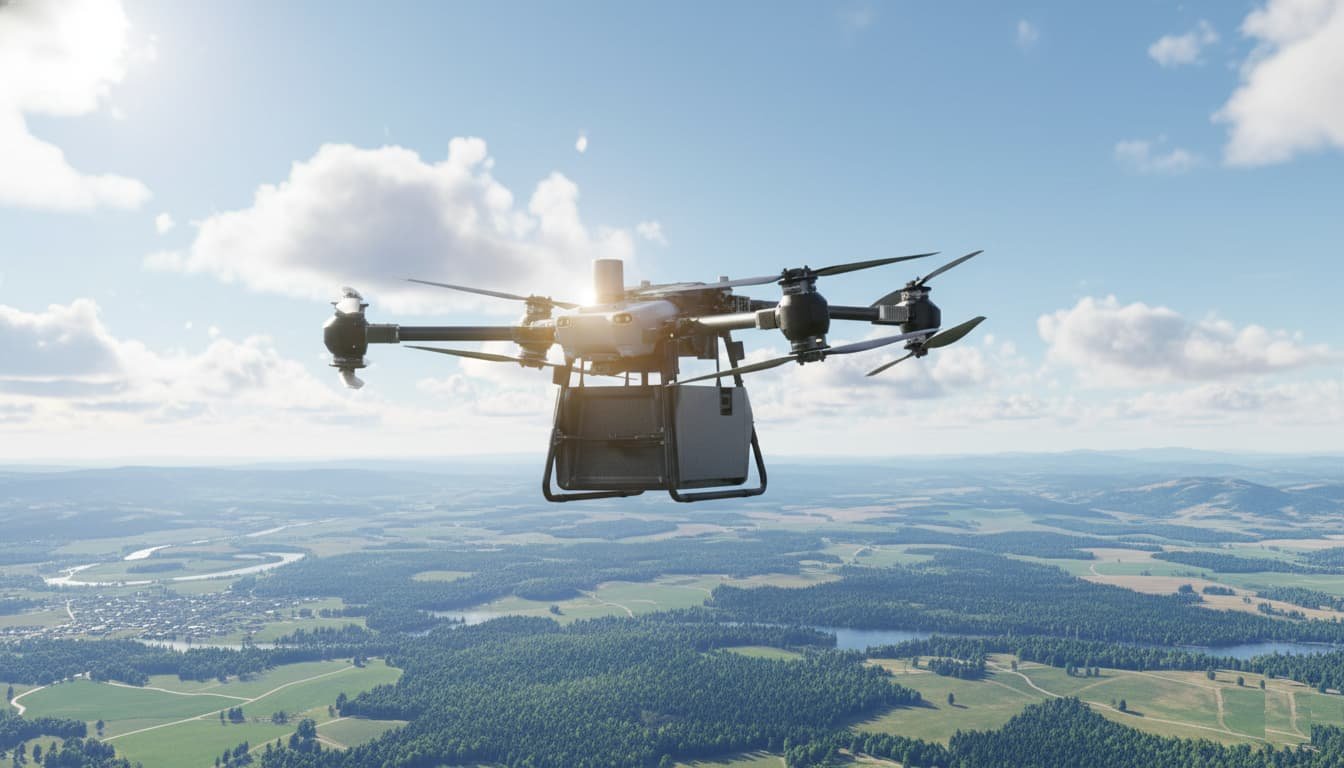
DJI’s FlyCart 30 introduces a payload-first design geared for logistics, rooftop delivery, and high-demand industrial use cases. Its modular battery configuration allows operators to choose between maximum payload or maximum flight range. With two batteries, the aircraft carries 30 kilograms of cargo; with one battery, capacity rises to 40 kilograms—beneficial when range is secondary to lifting power. Each battery stores nearly 2,000 watt-hours, giving the drone up to 16 kilometers of operational range depending on load. These specifications place the FlyCart in a performance class suitable for package delivery, construction support, emergency response, and remote-access sites where cranes or vehicles cannot reach.
The aircraft’s setup mirrors the workflow of smaller drones, reducing training barriers for licensed operators. Foldable arms, automated startup checks, GNSS acquisition, and interface familiarity maintain DJI’s recognizable user experience. The FlyCart adds more advanced systems beneath the surface, including heated battery cores for cold-weather performance, IP55 environmental protection, radar-assisted obstacle avoidance, and a fully independent parachute module for emergency descent. Together, these systems allow operations in conditions that would ground traditional aerial tools.
One of the FlyCart’s defining features is its integrated winch system. The 20-meter cable enables ground-level drop-off without landing, preserving safety when surface conditions are unstable or inaccessible. Load management algorithms actively measure swing, adjusting positioning to stabilize the payload beneath the drone. The auto-release mechanism disengages only when the line is tensioned and touching the ground—preventing accidental midair drops. A built-in cable-cut system provides emergency separation should the payload become entangled, protecting the aircraft and preventing uncontrolled behavior.
These features create new workflows in construction zones, remote facility access, rooftop deliveries, and disaster-response operations where equipment or supplies must be lowered precisely. Logistic teams can deploy the aircraft rapidly, complete delivered tasks, and reposition within minutes, significantly reducing the time required compared to cranes or manpower-heavy approaches.
Parallel to its logistics innovations, DJI’s Agras lineup demonstrates how heavy drones transform agriculture. Large spraying drones now provide safe, fast, and repeatable crop treatments without requiring ground vehicles or piloted aircraft. Farmers dealing with saturated soil, tall crops, or limited labor benefit from aerial application systems capable of covering 40–50 acres per hour. Automated route planning, terrain following, and consistent spray distribution deliver more uniform results than manual ground applications.
Agricultural operators increasingly build entire service businesses around Agras drones. The model allows a single operator to serve dozens of farms using equipment that requires minimal field setup and significantly reduces risk compared to low-altitude helicopters. Seasonal shading treatments for greenhouses, once performed by hand or through risky rooftop work, can now be completed within hours using precise aerial coverage. The ability to safely access roofs, edges, and large spans of greenhouse surfaces further demonstrates how drone spraying is moving beyond agriculture into commercial facility maintenance.
Heavy-lift agricultural drones demand efficient support systems. Mobile charging stations, cooling racks, and organized controller storage allow continuous operation from sunrise to sunset. A three-battery rotation—one flying, one cooling, one charging—keeps the drone airborne with minimal downtime. Modern charging stations rapidly replenish high-capacity batteries while maintaining temperature stability, ensuring they remain safe and ready for repeated flight cycles. For agricultural crews, uptime translates directly to revenue; if the drone is not in the air, it is not generating value. This operational mindset has led to the development of mobile command vans and field-ready workflow designs that place everything within reach for all-day flight schedules.
The capabilities of large drones extend well beyond crop treatment and payload delivery. Custom nozzle arrays and extended spray arms now enable exterior building washing, rooftop coating, and façade maintenance. The technology reduces the need for scaffolding, ladders, or rope-based descent, significantly lowering risk for workers. Pressure-treated coatings, shading agents, and reflective surface applications can be deployed rapidly over large structures such as commercial roofs and greenhouses.
Manufacturers are already prototyping accessories that expand these functions—detergent systems for window cleaning, horizontal spray modules for vertical walls, and long-range sprayers for hard-to-reach industrial sites. These adaptations reflect how versatile aerial systems can become when they combine lift capacity with precision control.
While heavy drones take center stage, supporting gear plays an essential role in documenting operations, training pilots, and enabling smooth field communication. Wireless dual-channel microphones help crews capture clear communication around high-noise environments, preserving clarity even with large propellers operating nearby. Compact action cameras and foldable consumer drones help teams survey fields, capture before-and-after records, and monitor coverage patterns from the air. These tools round out a workflow that depends not just on flight performance but also on accurate data and transparent field reporting.
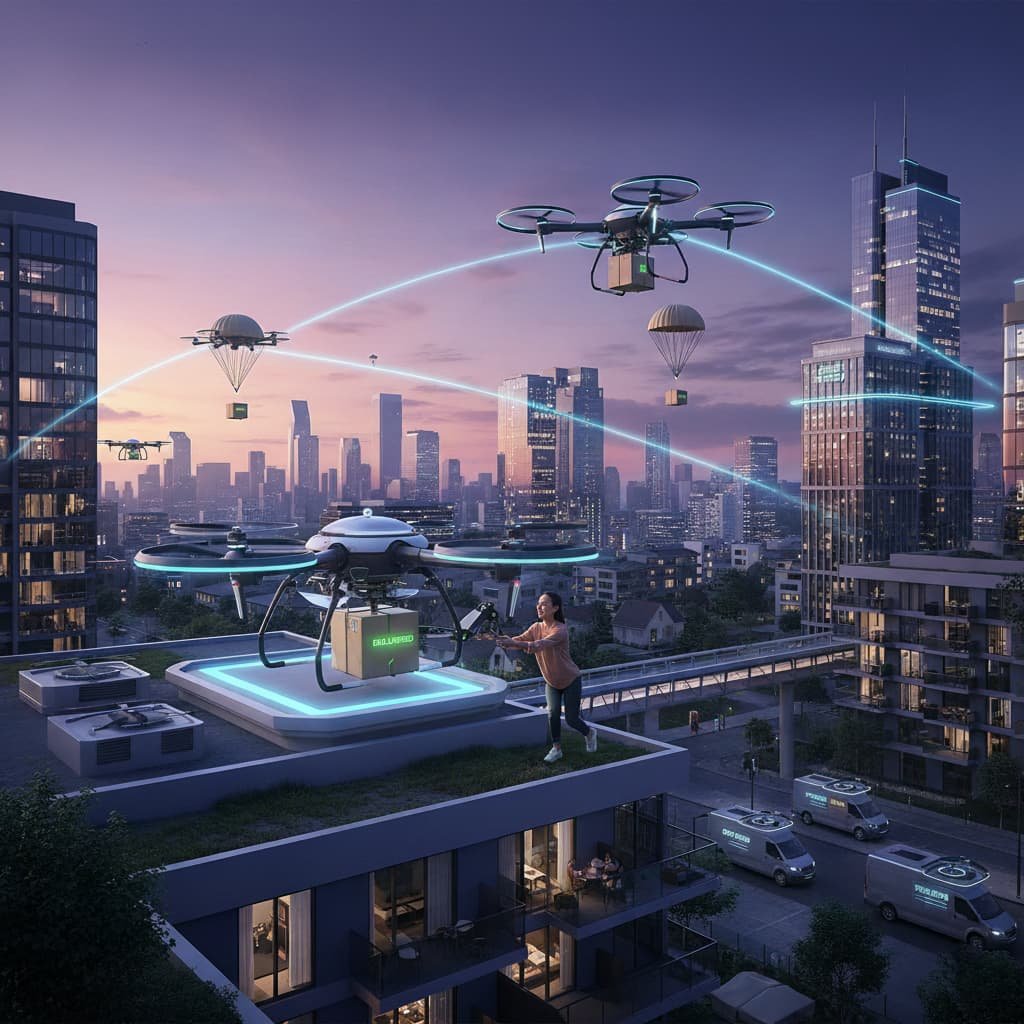
Industrial drones are entering a period of rapid adoption as businesses recognize their ability to solve problems traditionally handled by heavy machinery, ground crews, or piloted aircraft. Logistics teams use aerial delivery for rooftop transport, remote repairs, and cargo movement across hard-to-access sites. Farmers rely on spray drones to maintain crops efficiently during unpredictable weather conditions. Facility managers employ aerial sprayers to treat large structures quickly and safely.
The combined effect is a shift toward safer, faster, and more automated workflows across sectors that once operated almost entirely on foot or with ground vehicles. With expanding sensor arrays, improved autonomy, growing hardware ecosystems, and supporting training infrastructures, heavy-lift drones are transitioning from specialty tools to essential equipment across a wide range of industries.