Breaking News


Popular News


Enter your email address below and subscribe to our newsletter
Smart Discovery Store
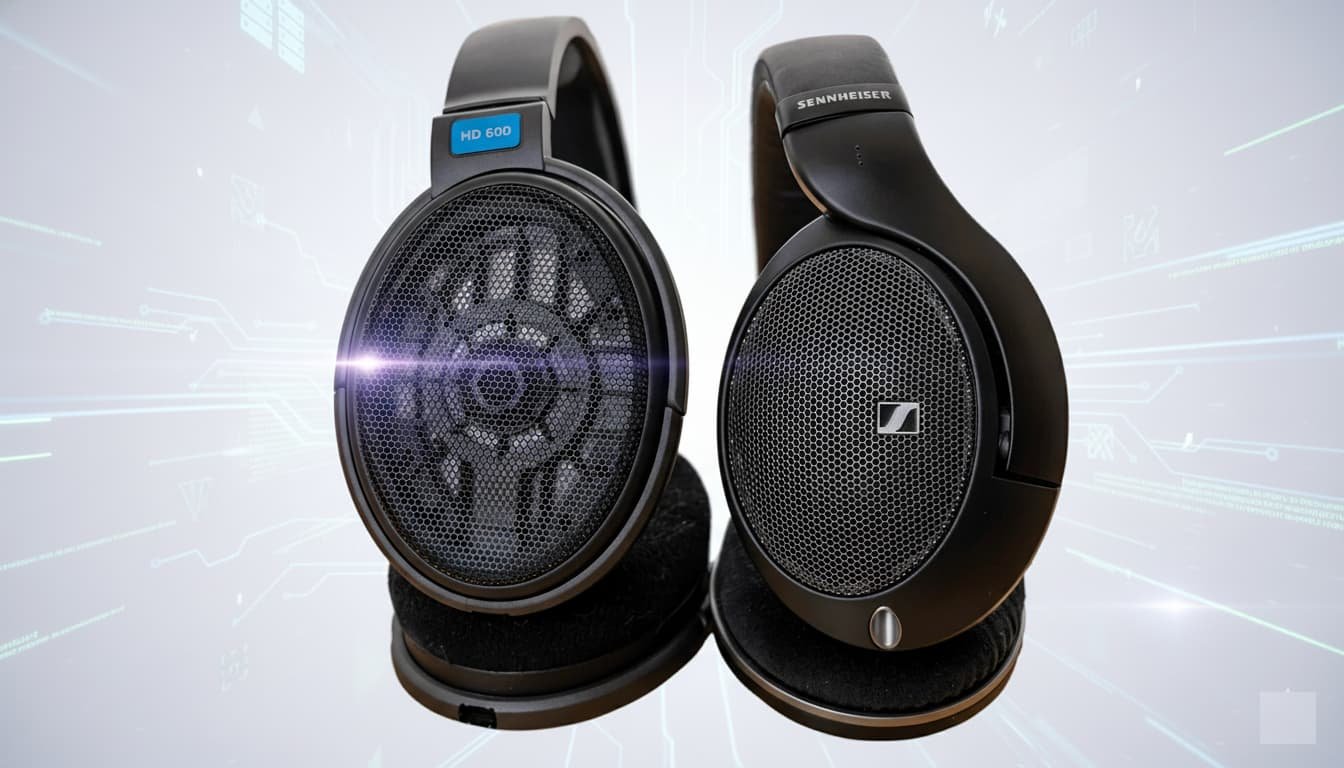
Sennheiser’s open-back headphones have long been defined by the shadow of the HD600, a model that set expectations for neutral sound and long-term listening comfort. The HD550 enters this lineage from the more affordable HD500 series, occupying a space below the HD600 and HD650 while borrowing much of their visual language and acoustic philosophy. Unlike previous budget-leaning entries, the HD550 is positioned as a serious listening tool rather than a compromise model, even being marketed for gaming use despite remaining firmly in the traditional headphone category.
This positioning reflects a shift toward users who want accurate sound without the higher cost or stronger clamping force associated with Sennheiser’s legacy reference models. The HD550 aims to deliver a familiar open-back experience with fewer ergonomic drawbacks and easier day-to-day usability.
The HD550 uses the same recognizable frame shape seen on the HD560s, featuring a single-arm headband design with limited swivel and tilt rather than full earcup articulation. The structure prioritizes flexibility over mechanical complexity, allowing the headphones to naturally conform to the head rather than relying on heavy joints or metal reinforcement. At just 237 grams, the lightweight construction is immediately noticeable and plays a central role in overall comfort.
Most of the chassis is plastic, which keeps weight low but also reduces the sense of luxury. While the materials feel solid during normal handling, the headphones are not built for rough travel or careless storage. The headband adjustment uses a ratcheting mechanism that is slightly coarse, but the wide comfort range makes precise placement less critical once worn.
Velour ear pads contribute significantly to comfort and breathability, while the synthetic leather headband padding distributes weight evenly across the top of the head. Clamping force is noticeably reduced compared to the HD600 series, making the HD550 far more forgiving for long sessions without sacrificing stability.
Included accessories are minimal but functional. The box contains a detachable 1.8-meter cable terminated in a 2.5mm connector on the headphone side, with a 3.5mm plug and a screw-on quarter-inch adapter for desktop equipment. The cable locks securely into the earcup using Sennheiser’s recessed channel system, preventing accidental disconnection during use.
A soft storage pouch is also included. While it offers basic protection, the material is thin and flexible, intended more as a dust cover than a travel case. There are no inline controls on the standard cable, though optional Sennheiser cables with integrated controls are available separately.
Comfort is one of the HD550’s strongest attributes. The reduced clamping force, combined with low weight and plush ear pads, allows the headphones to disappear during use. This makes them well suited for extended listening, editing, or gaming sessions where pressure fatigue becomes a concern.
As fully open-back headphones, the HD550 offers virtually no isolation. External sounds pass through freely, and audio leakage is substantial even at moderate volumes. This design enhances spatial presentation and natural sound but limits use to quiet environments. The exposed driver mesh emphasizes how acoustically open the headphones are, reinforcing their purpose as an indoor, stationary listening solution.
The HD550 presents a largely neutral sound signature with subtle refinements compared to older Sennheiser tunings. The midrange remains full and natural, preserving vocal clarity and instrument separation without sounding recessed or congested. Treble response is slightly more forward than classic HD600 models, adding clarity and detail that helps counter the “veiled” perception some listeners associate with older designs.
Bass response is clean and articulate but intentionally restrained. As with many Sennheiser open-backs, low-end frequencies roll off gently, prioritizing accuracy over impact. Bass notes remain well defined and textured, though listeners seeking heavy rumble may prefer closed-back alternatives or mild EQ adjustment.
The soundstage benefits from the open design, offering a wide and airy presentation that works well for both music and positional audio in games. Imaging remains precise, with clear placement across the stereo field.
The HD550 uses 38mm dynamic drivers with a rated impedance of 150 ohms. Despite this relatively high impedance, the headphones are highly sensitive and easy to drive. They perform well from laptops, desktops, and modest audio interfaces, while still scaling cleanly with dedicated headphone amplifiers.
The stated frequency response ranges from 6 Hz to 39.5 kHz, extending well beyond human hearing. While these extremes are largely theoretical, they reflect the driver’s ability to reproduce detail without strain across the audible spectrum.
Frequency response measurements show the HD550 tracking closely within the average listener preference curve, indicating a broadly appealing and balanced tuning. The response remains flat through the mids, with controlled upper-mid presence and a noticeable but manageable treble emphasis around the upper frequencies.
Bass roll-off appears clearly in measurements, aligning with listening impressions. This characteristic is not inherently negative, as it reduces muddiness and preserves clarity, but it does define the HD550’s sound as reference-leaning rather than immersive or bass-forward.
A narrow treble peak around the high-frequency region may be noticeable to listeners sensitive to brightness, particularly on recordings with sharp cymbal hits or distortion. For most users, this adds detail rather than harshness.
The HD550 is positioned at a price point that undercuts Sennheiser’s traditional reference models while delivering comparable sound quality and improved comfort. At its standard retail price, it already represents strong value, and sale pricing further solidifies its appeal as a cost-effective entry into high-quality open-back listening.
By offering a sound signature that rivals higher-end models with fewer ergonomic drawbacks, the HD550 challenges the necessity of stepping up to the HD600 series for many listeners. It stands as a practical, well-tuned headphone for users who want simplicity, comfort, and honest sound reproduction without premium pricing or complexity.
The Sennheiser HD550 is best suited for listeners who prioritize natural sound, comfort, and long-term usability. It works equally well for music listening, content creation, and casual gaming in quiet environments. Users who value accuracy over impact and prefer wired simplicity will find the HD550 a compelling option that bridges the gap between entry-level open-backs and legacy reference headphones.