Breaking News
Popular News


Enter your email address below and subscribe to our newsletter
Smart Discovery Store
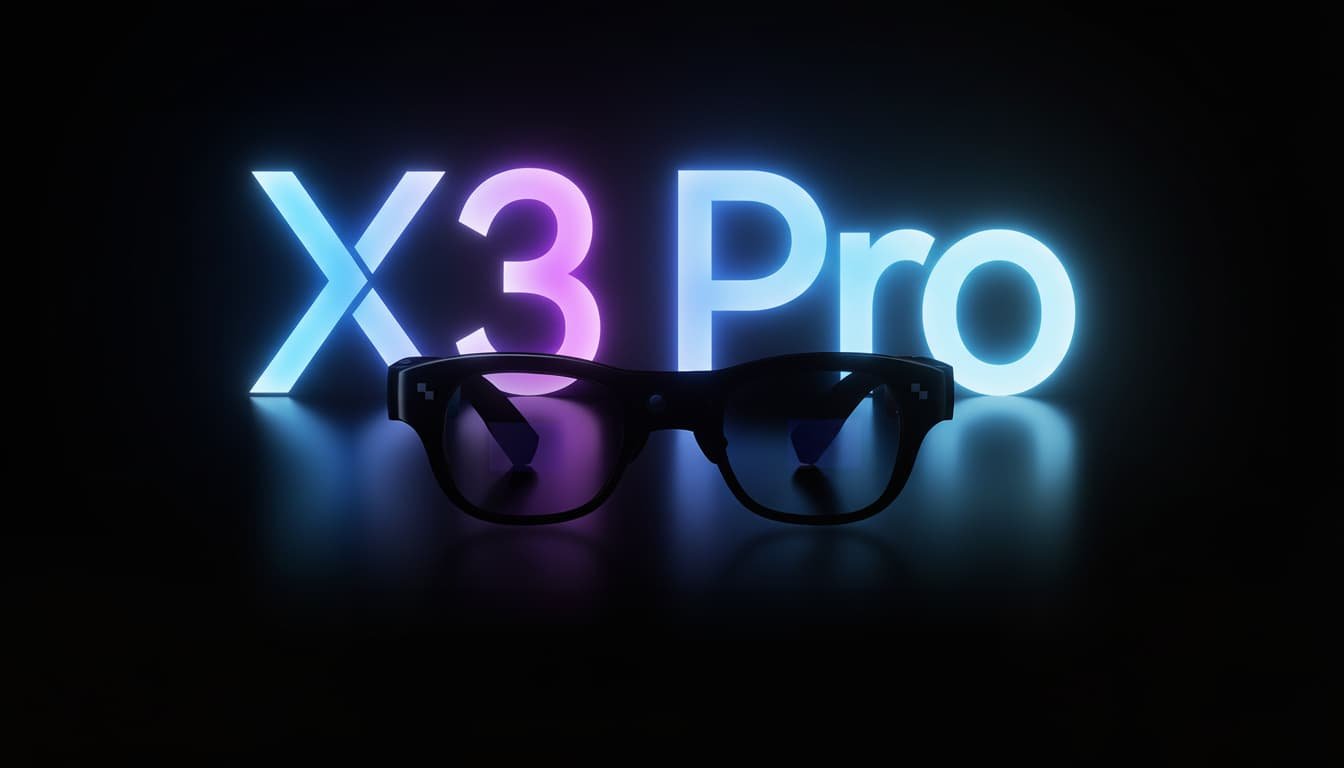
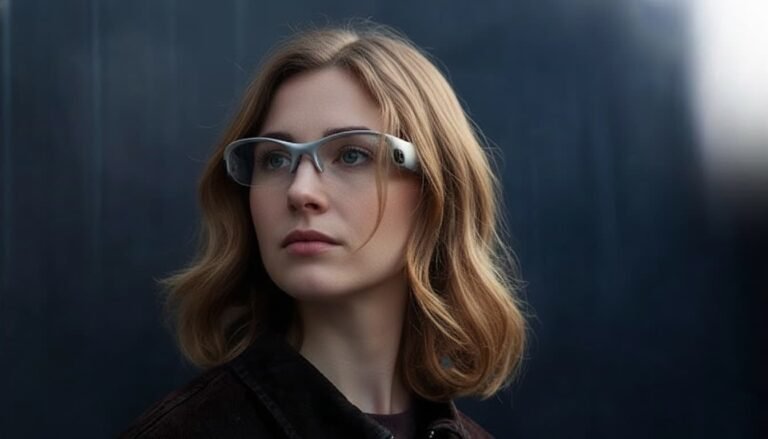
The RayNeo X3 Pro represents a clear shift in how augmented reality glasses are designed and positioned. Instead of leaning into experimental aesthetics or bulky hardware, these glasses adopt a familiar, everyday silhouette that closely resembles traditional eyewear. At a glance, they read as standard glasses rather than overtly futuristic hardware, which is a critical step toward mainstream adoption.
The design prioritizes balance and symmetry. Dual displays are embedded directly into both lenses rather than relying on a single monocular projection. This binocular approach allows the visuals to sit naturally in the user’s field of view, reducing eye strain and improving spatial comfort. Unlike earlier AR glasses that forced the user to glance toward a corner of their vision, the X3 Pro presents content in a centered, aligned manner that feels more intuitive during extended wear.
The frame houses most of the electronics within the arms, including the battery, speakers, and processing components. A central front-facing camera is integrated into the bridge, avoiding the off-center perspective that plagues many competing designs. This central placement not only improves aesthetics but also delivers a more natural point-of-view for photo and video capture.
From a hardware standpoint, the RayNeo X3 Pro focuses heavily on comfort and adaptability. The glasses include interchangeable nose pads in multiple sizes, allowing users to fine-tune the fit for extended sessions. This adjustability is especially important for a device intended to be worn like regular glasses rather than as a short-term gadget.
The lenses themselves feature a mild tint designed to improve display contrast without overly darkening the user’s view of the real world. The result is a subtle dimming effect that enhances on-screen clarity while remaining suitable for indoor and moderately lit environments. Compared to earlier AR generations, reflections and visual artifacts are significantly reduced.
Weight distribution is well managed. While the X3 Pro is slightly heavier than standard metal-frame glasses, it remains light enough for prolonged use without causing noticeable pressure on the nose or ears. The included carrying case mirrors the size and feel of a typical glasses case, reinforcing the idea that this device is meant to integrate seamlessly into daily routines rather than require specialized handling.
Prescription lens support is handled via clip-on inserts, allowing users to wear the X3 Pro as their primary corrective eyewear. This is a meaningful inclusion, as prescription limitations have historically been a barrier for many smart glasses users.
One of the defining features of the RayNeo X3 Pro is its dual-display system. By projecting visuals to both lenses, the glasses allow the eyes to work together naturally, creating a more comfortable and immersive experience. Content appears centered and stable, rather than floating awkwardly to one side.
The interface resembles a lightweight Android-style environment, enabling users to navigate apps, settings, and tools using touch gestures along the temples. Swipes and taps allow for directional control, selection, and back navigation, while long presses open quick-access menus. The learning curve is minimal, and responsiveness is consistent.
This dual-display approach also improves readability for tasks such as notifications, navigation prompts, and teleprompter text. Information feels anchored rather than overlaid, making it easier to maintain situational awareness while interacting with digital content.
The centrally mounted camera is another major differentiator. Positioned directly between the lenses, it captures footage from a true eye-level perspective, avoiding the skewed angles common in side-mounted camera designs. This makes the X3 Pro particularly compelling for creators, documentarians, and professionals who need hands-free recording.
The camera supports up to 4K photo capture and high-resolution video recording. During recording, a subtle on-screen framing guide appears within the display, allowing the user to align subjects without blocking their real-world view. The recorded image appears offset in the display, ensuring the user can remain focused on their surroundings rather than staring at a live preview.
This approach makes the glasses suitable for environments where traditional cameras would be intrusive or impractical. POV recording becomes more natural, whether capturing daily moments, work processes, or travel experiences.
AI functionality is deeply integrated into the RayNeo X3 Pro, transforming it from a display device into an interactive assistant. Voice activation allows users to engage AI features without manual input, keeping interactions fluid and hands-free.
The system supports multiple AI assistants, including Gemini, giving users flexibility rather than locking them into a proprietary ecosystem. AI capabilities include answering complex questions, performing calculations, summarizing information, and providing contextual explanations in real time.
One standout feature is real-time translation. The glasses support multiple translation modes, including voice-to-text conversation translation, live subtitle overlays, and visual scanning for signs and menus. With support for 14 languages, the X3 Pro is well suited for travel and multilingual environments.
Response times are quick enough to feel conversational, making AI interactions feel like a natural extension of thought rather than a delayed lookup process.
A particularly powerful feature of the RayNeo X3 Pro is its built-in teleprompter system. Unlike traditional teleprompters that scroll at a fixed speed, this implementation synchronizes with real-time speech recognition. As the user speaks, the system highlights and advances text dynamically, matching the natural cadence of delivery.
This speech-aware scrolling dramatically improves usability for presenters, educators, and content creators. The text remains aligned with spoken words, allowing users to maintain eye contact and natural body language while referencing prepared scripts.
The teleprompter can display scripts in adjustable positions within the user’s field of view, ensuring comfort and minimizing distraction. Combined with real-time speech analysis, this creates a feedback loop that enhances confidence and delivery accuracy without requiring external equipment.
Touch controls along both temples enable intuitive navigation. The right temple handles primary interactions such as selection, exit, and system shortcuts, while the left temple focuses on media playback, including volume control and track navigation. This separation reduces accidental inputs and keeps controls logically organized.
Integrated speakers deliver audio directly through the frame, allowing for private listening without isolating the user from ambient sounds. This open-ear design maintains awareness of surroundings while still providing clear audio for AI responses, media playback, and navigation cues.
Media playback, notifications, and app switching are all handled within the same unified interface, reinforcing the idea that the X3 Pro is a self-contained wearable computer rather than a peripheral accessory.
The RayNeo X3 Pro charges via USB-C and includes an angled cable designed to allow comfortable use while plugged in. This is particularly useful for long sessions, flights, or extended work scenarios where battery life may otherwise be limiting.
Connectivity options include Wi-Fi and Bluetooth, enabling integration with smartphones and other devices. The glasses can operate independently for many tasks, reducing reliance on constant phone interaction.
All components store neatly within the included case, reinforcing portability and ease of transport. The overall experience emphasizes readiness and immediacy, allowing users to pick up the glasses and begin using advanced AR and AI features without complex setup.
The RayNeo X3 Pro illustrates how AR glasses are evolving toward a more refined, socially acceptable form factor. By combining dual displays, a central camera, robust AI integration, and thoughtful ergonomics, these glasses move closer to becoming a genuine replacement for multiple devices.
Rather than serving as a novelty or niche tool, the X3 Pro positions itself as a versatile wearable for communication, content creation, translation, productivity, and real-time information access. The integration of AI directly into the user’s field of view highlights a future where assistance is ambient, contextual, and immediate.
This approach signals a broader shift in wearable technology—away from attention-grabbing hardware and toward tools that quietly augment daily life while remaining visually understated.