Breaking News
Popular News

Enter your email address below and subscribe to our newsletter
Smart Discovery Store
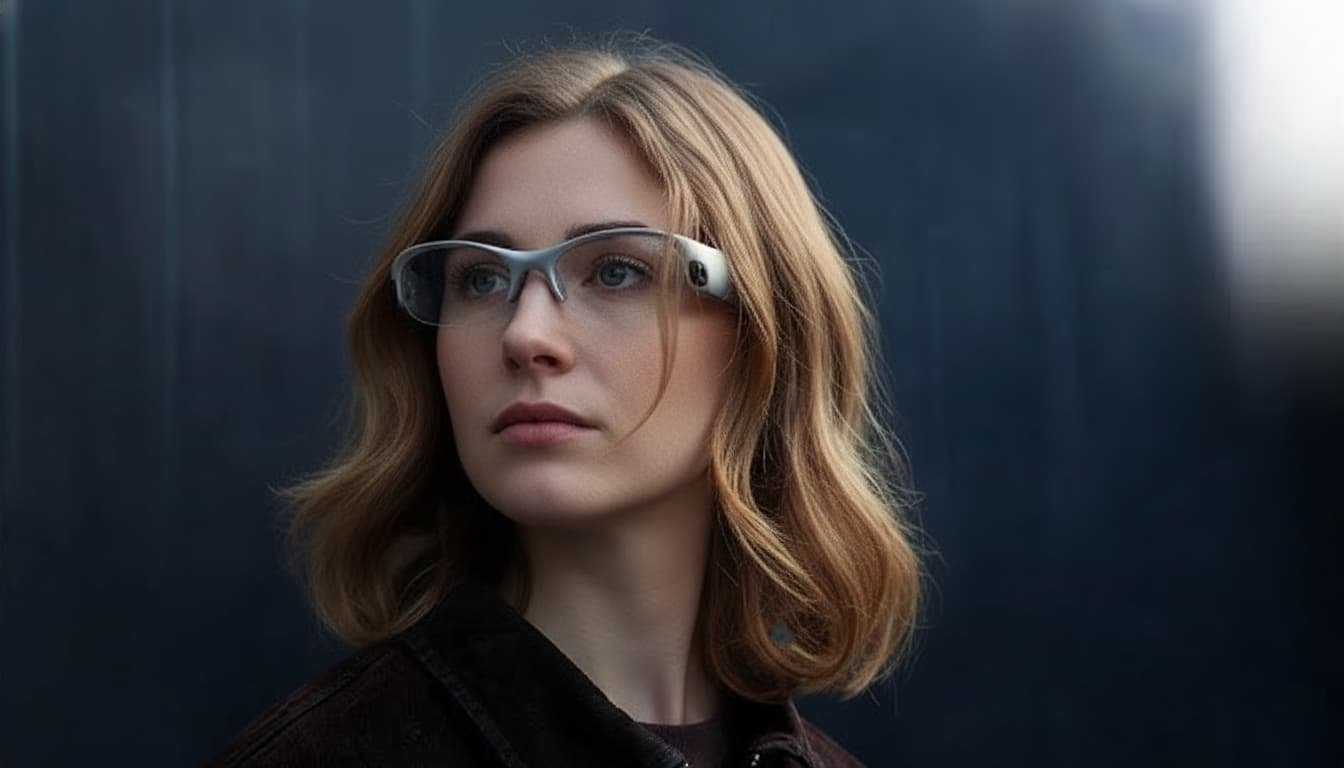
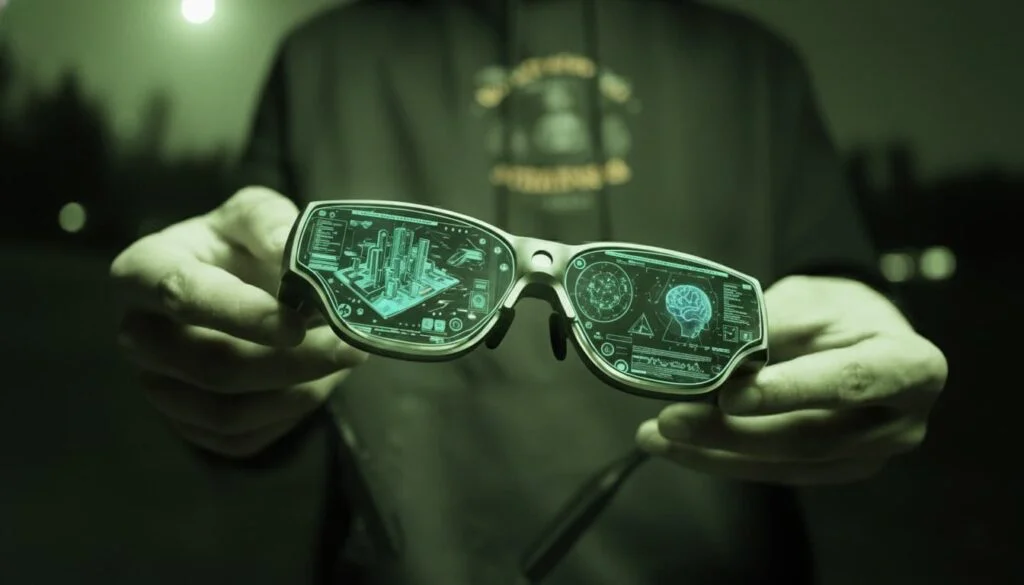
Pickle One introduces a new interpretation of what personal computing can look like when it moves directly onto the face. Rather than functioning as an accessory to a phone or laptop, the device positions itself as a standalone personal computer built into lightweight augmented reality glasses. At only 68 grams, it enters territory traditionally reserved for conventional eyewear, yet it delivers binocular full-color displays, onboard intelligence, and continuous contextual awareness.
The optical system delivers one of the brightest display outputs available in wearable AR, allowing content to remain visible even under direct sunlight. Wide field-of-view optics create immersive overlays without tunnel vision or artificial framing, supporting extended wear without excessive visual fatigue. The glasses project full-color imagery that remains private to the wearer, preserving discretion in public environments.
Industrial design prioritizes everyday aesthetics rather than futuristic exaggeration. The frame geometry was shaped around universal facial compatibility, ensuring balanced weight distribution and comfort across a wide range of face shapes. Subtle lens tinting enhances display contrast without significantly darkening natural vision. The result is a device that visually blends into daily life while quietly delivering advanced computing capabilities.
Pickle One’s binocular optical architecture delivers independent imagery to both eyes, supporting depth perception and reducing eye strain compared to single-lens systems. Full-color projection maintains clarity across varied lighting conditions, including outdoor daylight where many wearable displays struggle to remain legible.
Brightness calibration dynamically adapts to ambient conditions, ensuring that overlays remain readable without overpowering the surrounding environment. Color accuracy emphasizes natural tones rather than exaggerated saturation, supporting information clarity for navigation cues, notifications, text overlays, and contextual prompts.
The optical stack minimizes distortion and chromatic aberration, preserving visual comfort during long sessions. Subtle dimming of the lenses improves contrast while maintaining situational awareness, allowing safe use while walking or interacting with physical environments. Display alignment remains centered within the visual field, reducing the need for head repositioning or eye strain when interacting with on-screen elements.
This visual stability enables use cases that extend beyond brief interactions. Continuous reference displays, contextual prompts, and real-time overlays remain readable without becoming intrusive or distracting.
Pickle One replaces traditional app-centric interaction with an interactive avatar that functions as a persistent intelligent companion. Rather than waiting for explicit commands, the system proactively surfaces relevant information based on environmental context, behavioral patterns, and memory associations.
The avatar engages in natural conversational dialogue, reacting to location, calendar data, social signals, and recent activities. Suggestions appear organically within the visual field, offering reminders, contextual insights, and action prompts without interrupting attention flow. This approach positions the interface closer to ambient intelligence rather than reactive command systems.
The avatar evolves alongside the user, refining its understanding through continuous observation and memory correlation. Predictive intelligence enables anticipatory responses, surfacing information at moments when relevance is highest rather than when manually requested.
This conversational layer emphasizes emotional continuity and cognitive alignment rather than transactional input. Visual expressions and timing reinforce human-like interaction patterns, enhancing engagement without overwhelming attention.
At the core of Pickle One is Pickle OS, a memory-driven operating system modeled after human cognition. Instead of organizing data purely by files or apps, the system captures lived experiences as episodic memory units referred to as bubbles.
Each bubble represents a contextual moment—locations, conversations, activities, interactions, or decisions. The system continuously analyzes relationships between bubbles, forming associative clusters that evolve over time. These associations generate hypotheses, patterns, and contextual insights that refine understanding of behavior, preferences, and priorities.
As bubbles accumulate, the operating system builds layered contextual awareness rather than isolated data points. Confirmation, feedback, and interaction reinforce or adjust these associations, allowing the system to continuously adapt rather than relying on static configuration.
Memory processing emphasizes privacy-first ownership. Data remains under direct user control, enabling selective management of stored experiences. Memory editing allows refinement, deletion, or annotation of historical context, supporting transparency and long-term personalization.
This memory architecture transforms computing into an evolving cognitive system rather than a static application platform.
Pickle extends beyond the glasses through a companion platform accessible via web interface. This environment provides direct access to memory bubbles, allowing visualization, editing, and expansion of contextual knowledge. External applications can integrate into the memory system, contributing structured data that synchronizes back to the wearable device.
Creative workflows benefit from contextual continuity. The system allows ideation sessions to draw directly from accumulated experiences, preferences, and historical patterns. Collaborative interfaces encourage iterative refinement, with conversations generating new bubbles that expand the contextual model.
The creative partner model enables intelligent feedback loops rather than passive agreement. The system challenges assumptions, surfaces alternative perspectives, and cross-references historical insights to generate deeper ideation outcomes. Over time, this builds a living contextual framework that evolves alongside daily routines and long-term goals.
Synchronization across devices ensures continuity regardless of platform. Interactions on mobile, desktop, or wearable interfaces contribute equally to the evolving memory ecosystem, maintaining a unified intelligence layer across environments.
Pickle One is designed for continuous wear rather than episodic usage. The lightweight construction supports extended sessions without discomfort, enabling seamless integration into daily routines such as commuting, work sessions, creative brainstorming, and personal organization.
Contextual overlays assist with scheduling, navigation cues, memory recall, and spontaneous ideation without requiring manual device interaction. Voice-driven interaction maintains hands-free operation, supporting mobility and situational awareness in dynamic environments.
The system’s proactive intelligence reduces friction in decision-making and memory recall by surfacing relevant information at appropriate moments. Instead of searching through devices or applications, insights appear naturally within the visual field when contextual relevance peaks.
Over time, accumulated memory bubbles enhance personalization depth, enabling increasingly accurate predictions and creative suggestions. The platform evolves into a personalized cognitive extension rather than a generic assistant.
By blending optical comfort, ambient intelligence, memory-driven computing, and continuous personalization, Pickle One represents a shift toward wearable systems that prioritize long-term contextual intelligence over isolated feature sets. The device positions itself not as a gadget, but as a persistent personal computing layer that grows alongside everyday life.