Breaking News
Popular News


Enter your email address below and subscribe to our newsletter
Smart Discovery Store
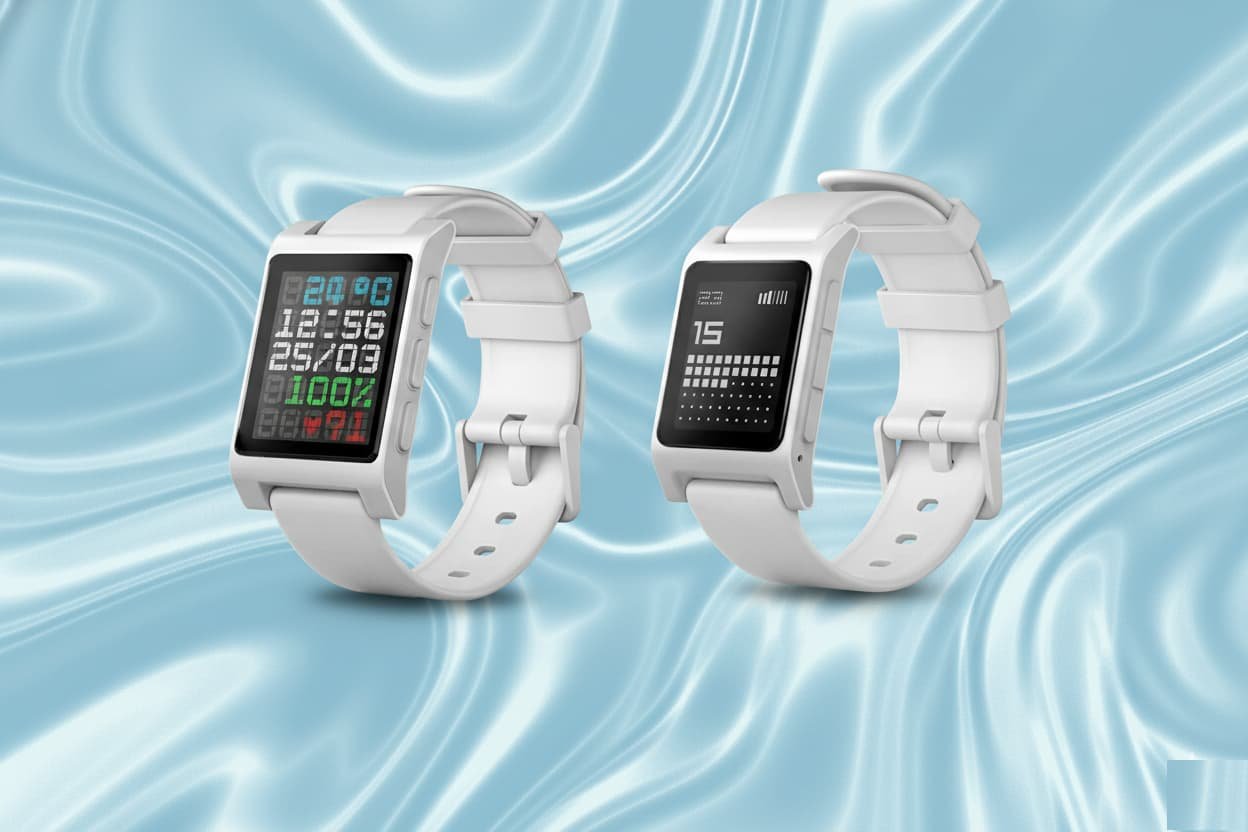
The Pebble 2 Duo Smartwatch takes a bold step backward in order to move forward. In a market dominated by health sensors, color AMOLED screens, LTE connectivity, and app overload, this watch deliberately strips away almost everything modern smartwatches compete on. There is no heart rate sensor, no blood oxygen monitoring, no altimeter, no camera, no cellular radio, no sapphire glass, and not even a color display. What remains is a lightweight, button-driven, black-and-white smartwatch that prioritizes battery life, simplicity, and customization.
For longtime Pebble fans, this device feels like a resurrection rather than a reinvention. The original Pebble built its reputation on weeks-long battery life, cross-platform compatibility, physical buttons, and a thriving developer community. After years of community-driven survival and open-sourcing of the original software, the Pebble brand has officially returned under its original founder with updated internals and modern connectivity while preserving the same philosophy that made the original popular.
Pebble originally launched through crowdfunding in 2012 and quickly gained attention for doing the opposite of what other smartwatches were attempting. Instead of becoming miniature smartphones, Pebble focused on notifications, timekeeping, customization, and battery longevity. The ecosystem flourished with thousands of community-created watch faces and apps.
After being acquired and discontinued, the platform survived through community support and third-party software maintenance. In 2025, the original software was open-sourced, enabling a full revival under a new company led by the original creator. The Pebble 2 Duo Smartwatch builds directly on that foundation while updating internal hardware, wireless components, vibration motor design, and sensor support.
Inside the box, the Pebble 2 Duo Smartwatch includes the watch itself, a magnetic charging puck, and a removable wrist strap. The watch maintains a familiar rectangular silhouette with three buttons on one side for navigation and confirmation, plus a dedicated back button on the opposite side. The buttons remain the primary interaction method, eliminating the need for touchscreen input entirely.
The magnetic charging solution uses USB-C connectivity, though the magnetic hold feels weaker than earlier Pebble chargers. The angled resting position on a desk may feel awkward for some users. No wall charger or cable is included, aligning with modern packaging trends, but without any visible price reduction to compensate.
The strap uses standard watch band sizing, allowing easy replacement with third-party bands. On the wrist, the watch feels extremely light and unobtrusive, often drawing attention simply because it looks different from modern glossy smartwatches. The design intentionally leans retro, appealing primarily to users who appreciate minimalism and functional aesthetics rather than premium materials.
The Pebble 2 Duo Smartwatch uses a 1.26-inch monochrome e-paper display. The screen remains readable in direct sunlight, consumes very little power, and maintains excellent contrast for simple text and icons. While animations and color graphics are absent, the display excels at clarity and efficiency.
Navigation relies entirely on physical buttons. This proves particularly useful in situations where touchscreens struggle, such as when wearing gloves, riding a motorcycle, working outdoors, or interacting with wet hands. Button responsiveness remains consistent and reliable.
The interface avoids preloaded clutter. Only a small number of default watch faces and system functions ship preinstalled. Users customize functionality through the companion mobile app, downloading additional watch faces, utilities, and tools as needed.
Battery life is one of the Pebble 2 Duo Smartwatch’s strongest advantages. Real-world usage consistently delivers multiple weeks of runtime on a single charge. Light usage can exceed two weeks comfortably, and future firmware optimization may push that even further.
This extended battery life allows continuous sleep tracking without the need for nightly charging, something most modern smartwatches cannot realistically provide. Users can simply wear the watch continuously without managing daily charging cycles, restoring a sense of reliability and convenience.
Charging is relatively quick, and standby drain remains minimal even with regular notifications enabled.
Despite its minimalist philosophy, the Pebble 2 Duo Smartwatch includes several practical sensors. A step counter tracks daily movement, while a sleep tracker provides overnight activity insights. The device also includes a microphone for voice dictation, a barometer, and a compass.
The watch avoids advanced health metrics such as heart rate monitoring, blood oxygen tracking, and ECG measurements. Instead, it focuses on simple activity awareness rather than medical-grade analytics.
Notifications display clearly on the e-paper screen with basic reply options, dismiss controls, and voice-to-text support. Some minor software quirks persist, such as occasional duplicate sender names in notifications, reflecting legacy behavior from earlier Pebble models.
Timers, alarms, and utilities are available through downloadable apps. Users can customize their workflow heavily depending on preferences, selecting only the tools they want without forced features or background services.
One of Pebble’s greatest strengths remains its massive library of community-created watch faces and apps. Thousands of designs remain compatible, many preserved through years of community stewardship. Animated faces, minimalist layouts, nostalgic pixel art designs, and experimental interfaces remain readily available.
Some legacy apps may no longer connect to outdated services, but most core functionality remains stable and usable. Customization is fast and flexible, reinforcing the device’s personality-driven appeal.
Firmware updates function across platforms without locking users into specific ecosystems, allowing updates from Android or iOS devices without restrictions.
While the Pebble 2 Duo Smartwatch excels in simplicity and endurance, its physical build quality feels less premium compared to modern smartwatches in the same price range. The materials feel lightweight and utilitarian rather than luxurious.
Pricing positions the device close to entry-level fitness trackers and even some midrange smartwatches that offer significantly more sensors and features. This creates a challenging value comparison for buyers focused purely on hardware capabilities.
Warranty coverage currently remains limited, raising concerns about long-term support expectations. Buyers may need to weigh community-driven longevity against formal manufacturer guarantees.
The Pebble 2 Duo Smartwatch is not designed to compete with feature-heavy smartwatches. It exists for users who value simplicity, battery life, physical controls, open customization, and distraction-free daily use. It intentionally avoids turning the wrist into another screen demanding attention.
For users seeking an always-on companion that quietly handles notifications, tracks basic activity, runs for weeks without charging, and supports deep personalization, the Pebble 2 Duo Smartwatch delivers a refreshing alternative to modern smartwatch complexity. Its appeal lies not in raw specifications, but in a philosophy centered on usability, longevity, and digital restraint.