Breaking News
Popular News




Enter your email address below and subscribe to our newsletter
Smart Discovery Store
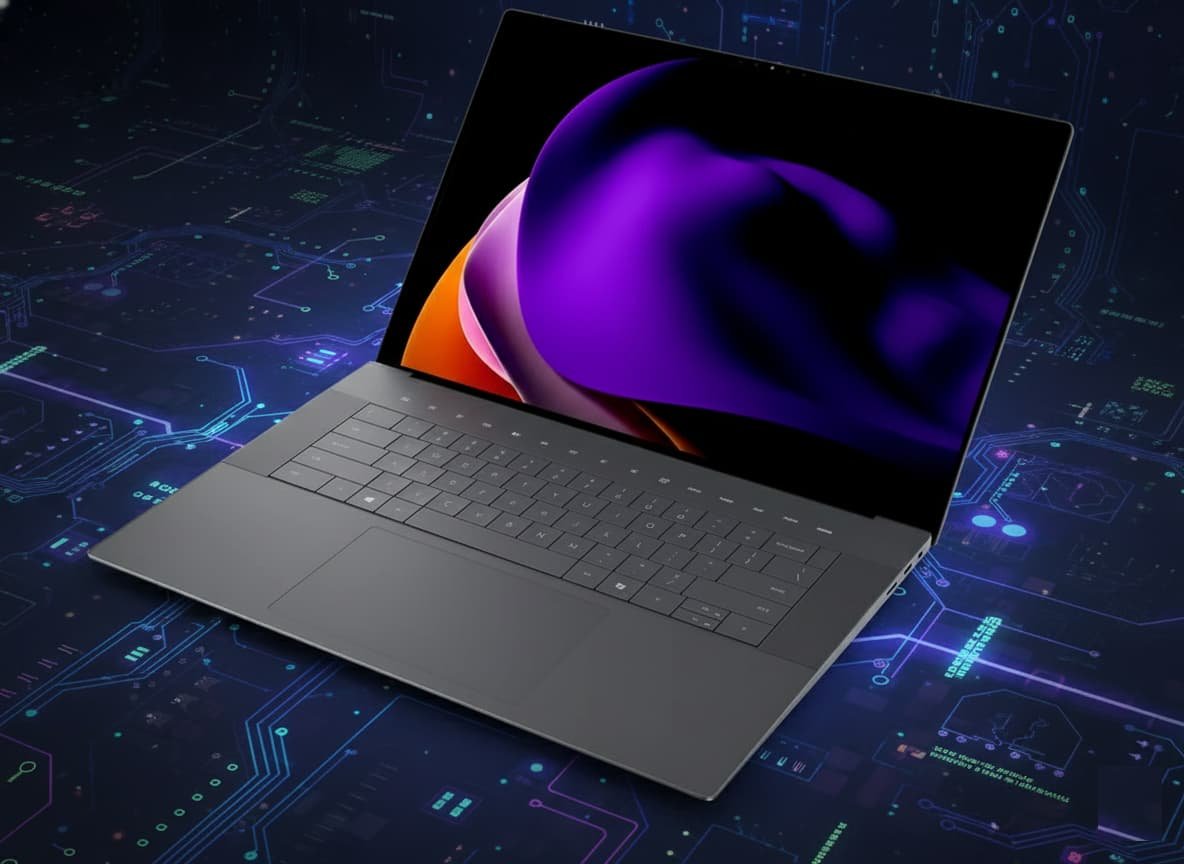
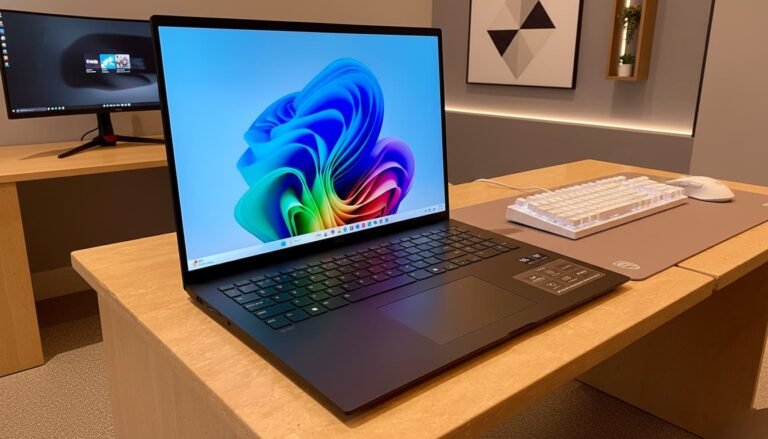
The latest Dell XPS generation marks a decisive return to premium industrial design after several years of controversial experimentation. Both the XPS 14 and XPS 16 introduce slimmer chassis profiles while simultaneously reducing overall weight. The 14-inch model drops roughly half a pound compared to its predecessor, while the 16-inch version sheds nearly a full pound. In hand, the reduction is immediately noticeable, particularly when compared to competing aluminum ultrabooks in the same class.
Edge profiling has been refined to reduce sharp transitions without sacrificing rigidity. The unibody construction maintains the dense feel expected from a flagship laptop while improving portability for daily commuting and mobile workflows. Dell also optimized internal component stacking to shrink the footprint, allowing the XPS 14 to occupy less desk space than many 13-inch competitors.
Color options remain understated and professional, with a traditional graphite finish alongside a lighter shimmer variant that subtly reflects ambient light without appearing glossy or reflective. The exterior aesthetic preserves the XPS identity while modernizing surface treatment and machining tolerances.
Structural stiffness remains high despite thinner panels, minimizing flex in the keyboard deck and lid. Hinge resistance feels calibrated for one-handed opening while maintaining screen stability at a wide range of viewing angles. The overall build communicates a return to engineering discipline rather than experimental minimalism.
The centerpiece of the refreshed XPS lineup is the adoption of tandem OLED display technology across both size classes. The panel delivers high peak brightness, excellent color accuracy, and deep contrast ratios typically associated with premium creative monitors. The InfinityEdge design minimizes bezel thickness while maintaining structural integrity around the panel perimeter.
Variable refresh rate support allows the display to dynamically scale between low refresh operation for static content and up to 120 Hz for motion-intensive workflows. This adaptive behavior balances responsiveness with energy efficiency, contributing to extended battery longevity during mixed workloads.
Resolution targets the 3K class, delivering sharp text rendering without overburdening integrated graphics pipelines. Touch input is supported with improved anti-glare coating that significantly reduces reflections under studio lighting and bright indoor environments. HDR capability enables high dynamic range content playback with improved highlight detail and shadow depth.
While the tandem OLED panel is optional rather than standard, it establishes a clear differentiation tier within the lineup for users prioritizing visual fidelity. The base configuration retains IPS technology for cost efficiency, preserving accessibility while allowing premium upgrades for display-sensitive professionals.
Color consistency across viewing angles remains strong, and brightness uniformity avoids the common banding issues associated with earlier OLED laptop implementations. For content creation, media consumption, and productivity workflows, the display quality competes directly with high-end mobile workstations and creative laptops.
Dell addressed multiple usability complaints from prior XPS generations with tangible improvements across the input surface. The controversial touch-based function row has been replaced with a traditional physical function key layout, restoring tactile feedback and eliminating accidental activations during blind typing.
Key travel has been recalibrated to deliver firmer tactile response without increasing overall thickness. Stabilization has improved, reducing lateral wobble on larger keys while maintaining quiet actuation suitable for shared environments. The keyboard now supports extended typing sessions without fatigue, balancing firmness and rebound consistency.
The touchpad introduces subtle physical edge boundaries that allow fingers to sense transitions without visual confirmation. This change improves precision gestures and reduces overshoot errors during multi-touch navigation. Haptic feedback remains consistent across the surface, providing reliable click simulation without mechanical movement.
Webcam hardware receives a substantial upgrade with an 8-megapixel sensor integrated into the thin display lid. Image quality improves clarity, low-light performance, and color accuracy during video conferencing. Infrared support enables facial authentication, compensating for the removal of fingerprint readers in the current configuration.
Audio tuning benefits from refined speaker placement and resonance chamber optimization, delivering cleaner mids and improved spatial separation for video calls and media playback.
Powering the new XPS models are Intel Core Ultra Series 3 processors built on the Panther Lake architecture. These chips integrate enhanced CPU cores alongside significantly upgraded Xe graphics configurations, scaling up to 12 graphics cores in top-tier models. Memory bandwidth improvements and architectural optimizations target efficiency gains rather than raw wattage escalation.
Memory capacity scales up to 64 GB with high-speed modules, enabling multitasking-heavy workflows such as large dataset analysis, multi-VM environments, and creative production pipelines. Storage support extends to PCIe Gen 5 SSDs with capacities reaching 4 TB, offering fast sequential throughput and low latency access for large project files.
Thermal engineering received meaningful revisions, with larger cooling fans and improved airflow channeling inside the thinner chassis. The redesigned cooling system aims to sustain higher boost clocks without aggressive thermal throttling while maintaining acceptable acoustic levels during prolonged loads.
Discrete GPU options are currently absent in the initial launch lineup, relying exclusively on integrated Xe graphics. While integrated performance improvements are substantial, heavy 3D rendering or advanced gaming workloads remain outside the primary target segment. Dell has indicated future expansion of the XPS lineup with alternative configurations, signaling potential GPU-equipped variants later in the cycle.
AI acceleration benefits from the latest neural processing blocks embedded within the Core Ultra platform, enabling local inference workloads for productivity enhancements, creative tools, and background optimization tasks without continuous cloud dependency.
Port selection emphasizes modern connectivity with three Thunderbolt 4 ports serving as the primary expansion interface. This design prioritizes bandwidth flexibility over port diversity, enabling docking solutions, external GPUs, and high-resolution display output through adapters. Legacy ports such as HDMI and SD card readers are omitted, encouraging modular accessory usage.
Wireless connectivity benefits from updated radio modules delivering improved throughput and stability in congested environments. Bluetooth performance supports low-latency peripherals and multi-device pairing without degradation.
Battery capacity remains consistent across both the 14-inch and 16-inch models at approximately 70 watt-hours. Despite identical capacity, the smaller display footprint of the 14-inch model yields marginally longer runtime expectations. Dell utilizes a newer battery cell technology that improves energy density while reducing physical mass.
Projected endurance targets include extended video playback scenarios exceeding typical ultrabook benchmarks, particularly in LCD configurations. OLED variants may exhibit slightly reduced runtime due to panel power characteristics but remain competitive within premium categories.
Power management integrates adaptive refresh control, CPU scheduling optimizations, and thermal load balancing to sustain extended unplugged workflows without aggressive throttling.
The refreshed XPS lineup repositions Dell aggressively against premium ultrabooks and creative laptops that dominate the upper-tier productivity segment. By restoring traditional usability elements while modernizing display technology and internal architecture, the platform balances innovation with ergonomic stability.
Weight reductions improve mobility parity with lightweight competitors while preserving premium materials and rigidity. The tandem OLED display elevates visual differentiation, especially for users prioritizing color fidelity and media workflows. Integrated graphics advancements reduce dependency on discrete GPUs for mainstream professional tasks.
Pricing tiers reflect modular scalability, allowing buyers to optimize configurations based on display choice, memory capacity, and storage requirements. The absence of discrete GPU options keeps thermal complexity low and preserves battery efficiency but may limit appeal for specialized creative workloads.
Future expansion within the XPS ecosystem suggests additional variants, potentially addressing performance tiers and port diversity based on market feedback. The current generation establishes a strong foundation focused on refinement rather than radical redesign.
By correcting prior usability missteps, improving portability, and delivering tangible platform upgrades, the XPS 14 and XPS 16 restore credibility within the premium Windows laptop segment and signal a renewed commitment to long-term product evolution rather than short-lived experimentation.