

Smart Discovery Store

Pimax Crystal Super OLED VR Headset – Modular Optics Redefine High-End Virtual Reality
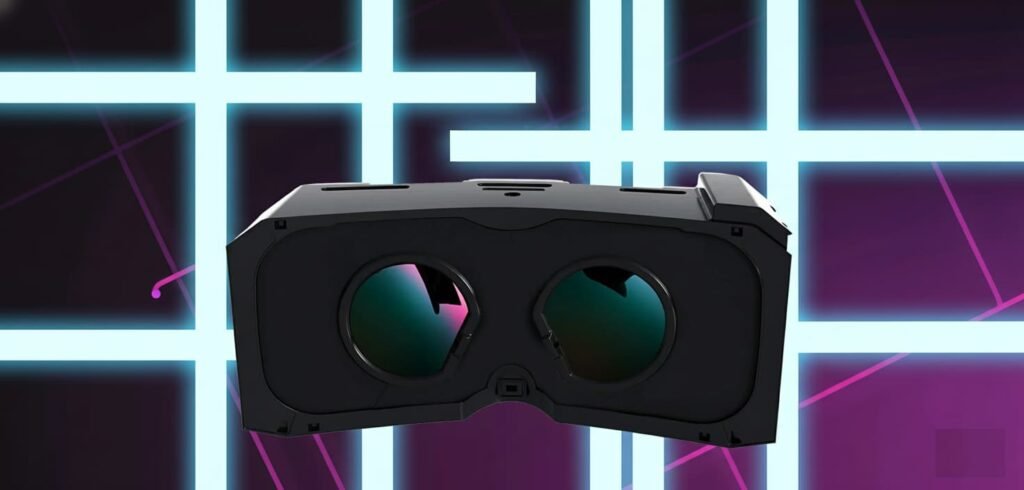
The Pimax Crystal Super is not a typical VR headset. Instead of locking users into one fixed display and lens configuration, it introduces a fully modular optical system that allows the entire lens and display assembly to be swapped out and upgraded. This approach opens the door to future-proofing, experimentation, and customization in a way no other mainstream headset currently offers. With new ultrawide and OLED modules now available, the Crystal Super pushes visual immersion, clarity, and realism further than most consumer VR platforms.
While traditional VR headsets rely heavily on headline specs like resolution and refresh rate, real-world immersion depends far more on lens quality, usable field of view, focus consistency, distortion control, and color accuracy. The Crystal Super focuses heavily on optics, and with its latest OLED module in particular, it delivers an experience that feels closer to natural vision than anything else currently available in the consumer VR market.
Modular Optical System and Hot-Swap Design
One of the defining features of the Crystal Super is its interchangeable optical architecture. The entire lens and display module can be removed and replaced in seconds using simple retention clips. There is no complex calibration process, no tools required, and no hardware disassembly beyond releasing the module itself.
Once a new module is installed, the Pimax software detects the hardware automatically, applies firmware updates if needed, and allows customization such as LED accent lighting. This modular approach allows users to tailor their headset for different use cases, such as wide field-of-view immersion, maximum image quality, or future display upgrades without replacing the entire headset.
This flexibility transforms the headset into a platform rather than a single fixed product, extending its lifespan and allowing enthusiasts to evolve their setup as display technology advances.
Ultrawide Module and Expanded Field of View
The ultrawide module features dual 3840 × 3840 QLED panels per eye running up to 90Hz and expands the horizontal field of view to approximately 140 degrees. This is significantly wider than most mainstream headsets, which typically sit in the 100–110 degree range.
The increased field of view noticeably reduces the tunnel-vision effect that many VR headsets still exhibit. Peripheral awareness improves, cockpit interiors feel more spacious, and environmental motion becomes more immersive. In driving simulations, the wider FOV enhances spatial awareness, braking perception, and depth cues.
However, the extreme edges of the ultrawide view do introduce softness, mild color fringing, and optical distortion. While the expanded view is impressive, not all of the additional screen real estate remains perfectly sharp. Image quality at the center remains strong, but the edges feel slightly compromised compared to premium pancake lens systems.
Colors on the QLED module appear flatter and less natural than OLED panels, giving a slightly washed-out appearance in comparison to higher-end OLED headsets. While the ultrawide module excels at immersion and spatial realism, it prioritizes breadth over optical purity.
OLED Module and Visual Clarity
The OLED module represents the flagship visual experience of the Crystal Super. It uses Sony micro-OLED panels paired with concave pancake lenses, delivering extremely high pixel density, vibrant color reproduction, and a massive focus sweet spot.
Clarity across the center 70–80% of the display remains exceptionally sharp, with minimal loss of detail as the eye moves away from the center. Unlike many VR headsets where clarity drops rapidly outside the center, the OLED module maintains consistent focus across a much larger usable viewing area.
Pixel structure becomes virtually invisible, delivering near-retina visual density. Fine textures, dashboard details, gauge markings, distant track elements, and lighting transitions appear remarkably lifelike. The increase in resolution over previous OLED headsets becomes immediately noticeable, especially in simulation environments where micro-detail matters.
Color reproduction benefits significantly from OLED technology. Blacks appear deep and true, highlights remain vibrant, and contrast levels add depth and realism to virtual environments. Lighting effects, weather conditions, and reflections become more convincing and immersive compared to QLED panels.
The concave lens design allows the eyes to sit closer to the optics, further improving clarity and reducing distortion. Optical comfort remains high even during long sessions, minimizing eye strain and visual fatigue.
Refresh Rate and Performance Demands
The OLED module supports up to 90Hz refresh rate, offering smoother motion, reduced perceived latency, and improved animation fluidity compared to lower refresh configurations. Steering animations, environmental movement, and head tracking all feel more responsive and natural at this refresh level.
Driving this level of resolution and refresh rate places extreme demands on GPU performance. Even high-end GPUs struggle to maintain consistent frame rates at full resolution with heavy graphical mods enabled. Users aiming to fully utilize the OLED module realistically need top-tier graphics hardware to maintain optimal performance.
Dynamic resolution scaling, graphics tuning, and selective effects optimization may be required depending on workload and system configuration. This headset targets enthusiasts with powerful systems rather than mainstream users.
Comfort, Fit, and Ergonomics
The Crystal Super is physically larger and heavier than ultra-compact headsets, but its weight distribution system makes it comfortable for extended seated use. The top strap and rear clamp stabilize the headset effectively, preventing pressure hotspots and reducing face fatigue during long sessions.
While the headset’s bulk may limit standing or active movement scenarios, it works exceptionally well for simulator rigs, desk-based VR applications, and seated experiences. Minor pressure marks may occur during long sessions but typically fade quickly after removal.
The lens housing can lightly contact the nose area for some face shapes, but adjusting strap tension resolves this easily. Overall comfort remains surprisingly good given the hardware density.
Audio, Tracking, and Platform Features
Built-in speakers deliver strong clarity and volume without requiring external headphones. Audio quality remains sufficient for immersive simulation use, voice communication, and environmental effects.
Inside-out tracking eliminates the need for external base stations, simplifying setup and improving portability within fixed spaces. Tracking remains stable and accurate for seated and cockpit-based applications.
The modular platform also positions the Crystal Super for future upgrades, allowing users to adopt new optical modules as they become available rather than replacing the entire headset.
Overall Assessment
The Pimax Crystal Super OLED module delivers the most visually impressive VR experience currently available for consumer simulation and high-end PC VR. The combination of extreme resolution, OLED contrast, wide usable clarity, and advanced lens design creates a level of realism that surpasses most competing headsets.
While the headset demands powerful hardware and carries a premium price point, its modular architecture, optical excellence, and future upgrade potential make it a compelling long-term investment for enthusiasts seeking uncompromised immersion. For users focused on simulation realism and visual fidelity, the Crystal Super OLED currently sits at the top of the VR performance hierarchy.