

Newsletter Subscribe
Enter your email address below and subscribe to our newsletter

Enter your email address below and subscribe to our newsletter
Smart Discovery Store
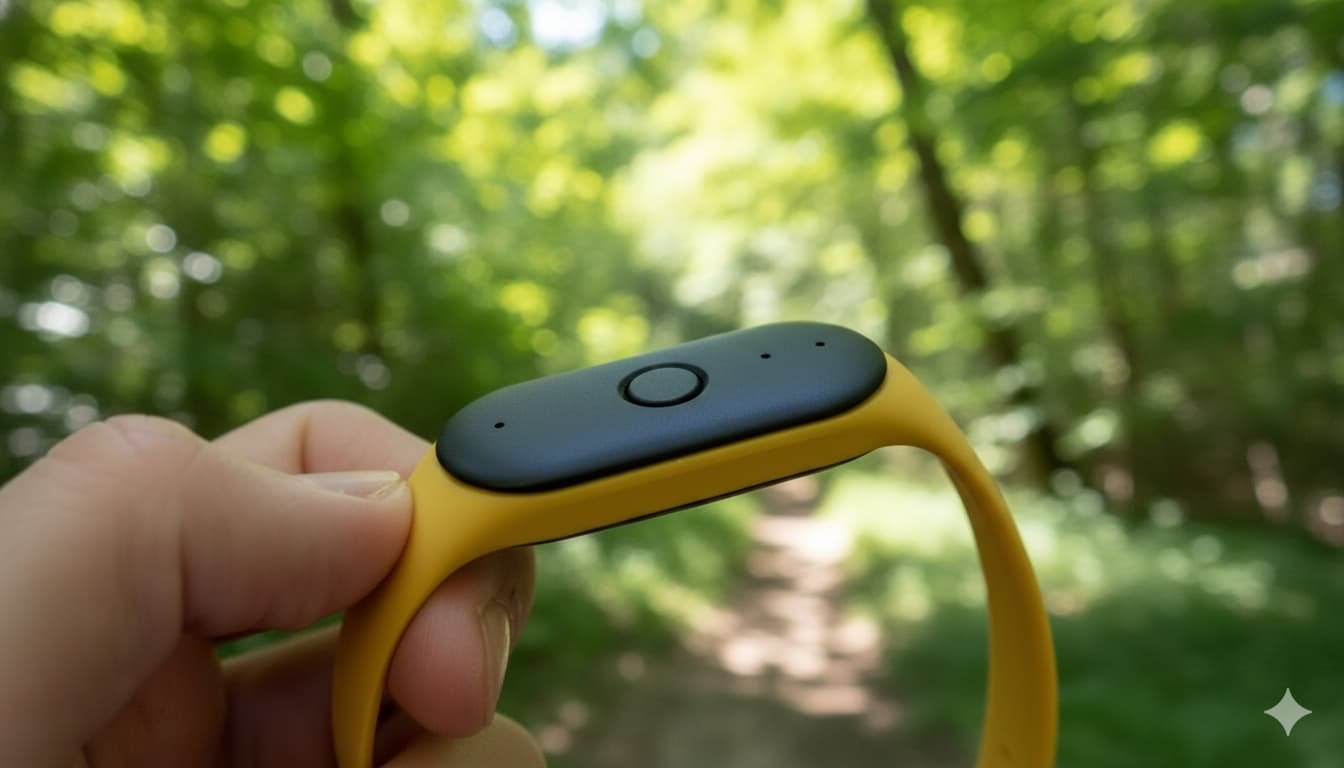
Be is a $50 AI wearable built as a small microphone pin with two mics and a single action button for instant muting. It attaches using either a bracelet or lapel clip and is meant to capture conversations continuously. The device is roughly thumb-sized, slightly thicker than a smartphone, and lightweight enough to wear daily. Battery life is one of its strongest attributes—around four days of continuous capture, thanks to an automatic low-power mode when no speech is detected.
Durability and retention, however, are significant weaknesses. During 30 days of use, the device detached multiple times—at a tech expo, during airport security, and while exiting a car. The dark matte surface blends easily into surroundings, making it hard to retrieve when dropped. Without secure fasteners or Apple Find My integration, losing the device is a realistic concern.
Be’s core system relies entirely on audio sensing. It records speech, converts it into transcripts, analyzes the text, and generates insights about routines, tasks, and key topics. It can sync with email, calendar, and contacts, enriching the context behind interactions.
But audio-only sensing limits its accuracy. Without a camera or spatial data, it depends completely on sound patterns to identify speakers and interpret location. Even when human listeners clearly distinguish between two voices, the device often merges them or mislabels them entirely. Quiet environments yield acceptable results, but typical real-life settings—restaurants, sidewalks, stores—introduce background noise that disrupts transcription accuracy.
This is a classic manifestation of the cocktail party problem, where isolating individual voices in a noisy environment becomes nearly impossible. At a small gathering with about 15 participants, Be mistakenly detected 34 different speakers. When transcripts are inaccurate, every downstream insight—summaries, recommendations, to-dos—suffers from the same foundational errors.
Despite inconsistencies, the wearable has moments of genuinely impressive performance. When asked to recall the names of wines casually mentioned earlier in the day, it provided an accurate response—demonstrating the value of a device that logs every spoken detail without requiring manual note-taking. Its ongoing suggestion list can also surface travel plans or commitments the user never formally recorded, highlighting patterns detected from natural conversation.
Battery life management, on-device summaries, and low-power detection are smooth and reliable. The built-in chat assistant adds context-aware retrieval, offering personalized answers that tie back to the user’s captured history.
Speaker confusion is Be’s most persistent flaw. When the system mixes the wearer’s voice with others, it creates a profile full of incorrect personal details—interests belonging to friends, statements misattributed from ambient conversations, and random topics overheard in busy environments. These inaccuracies accumulate and affect everything the assistant generates.
If the device cannot reliably distinguish who is speaking, its long-term memory becomes polluted, diminishing usefulness over time. Manual correction is possible but impractical for daily use. A more effective approach would be a nightly review dialogue, where the user confirms or denies key events or facts—helping clean the data and strengthen voice recognition patterns.
The largest concern isn’t how Be handles the wearer’s data—it’s how it handles everyone else’s. Anyone who speaks near the device has their words transcribed and processed. While the company states that audio is not stored and no data is sold or shared, the transcripts themselves remain detailed logs of private interactions.
In several U.S. states, recording without explicit consent is illegal. The device does not educate users on when it is appropriate to record, how to notify others, or what local laws require. Even with the promise of future on-device processing to reduce cloud reliance, the ethical issue remains: wearables that constantly listen introduce privacy implications for everyone nearby, not just the owner.
The AI wearable market is expanding rapidly. Plaud Note and Plaud Note Pin focus more heavily on workplace transcription and offer audio playback with subscription-based transcription tiers. Meanwhile, newer products like Friend and Omi aim to act as AI companions and real-time assistants, with Omi promoting a future “brain mod” designed to interpret neurological signals—an ambitious and controversial claim that highlights how experimental this space has become.
All of these devices share similar goals: continuous listening, contextual understanding, and AI-driven summarization. What differentiates them is how ambitiously they push into personal territory and how they handle user—and bystander—data.
Be correctly captured some basic facts—occupation, city, personal interests—but missed numerous details. It mixed names, misinterpreted relationships, and often confused the user with others nearby. Its concept of “who the wearer is” after a month was a blend of accurate biography and random noise.
The device can surface helpful memories, but cannot yet build a reliable long-term model of the user without frequent errors.
At $50, Be is an intriguing experimental product. It offers glimpses of what AI wearables may eventually become: passive memory systems that recall conversations, track context, and optimize daily routines without manual effort. But today, its utility remains limited. Accuracy issues, privacy concerns, and unpredictable transcription weaken its reliability as a daily assistant.
Environmental impact is another consideration. AI wearables are part of a growing category that consumes energy through cloud processing and introduces more single-use hardware into circulation. Many buyers may try the device briefly and abandon it, turning experimental gadgets into waste.
Be represents the early stage of a powerful idea, but not a fully matured execution. It is best seen as a preview of a future where AI integrates more seamlessly into everyday life—one that will require tighter privacy protections, clearer ethical guidelines, and far more robust on-device intelligence before it becomes truly practical.