
Newsletter Subscribe
Enter your email address below and subscribe to our newsletter

Enter your email address below and subscribe to our newsletter
Smart Discovery Store
Meta’s newest product, the Meta Ray-Ban Display smart glasses, represents one of the biggest jumps in consumer AR technology in years. Less than 12 months ago, Meta publicly showcased its Orion AR prototype — an impressive but unrealistic device that required a separate computer pack, overheated easily, cost tens of thousands of dollars in materials, and had severe limitations. It was a look into the future, not a product anyone could buy.
Fast-forward to today, and Meta is introducing a fully finished, lightweight, self-contained pair of smart glasses with a built-in color display, advanced neural-band controls, and a surprising list of practical features. The rapid improvement raises a bigger question: are we slowly moving toward a post-smartphone world?
Here’s a detailed look at what these new glasses offer, how they work, and where they fit in the current tech landscape.
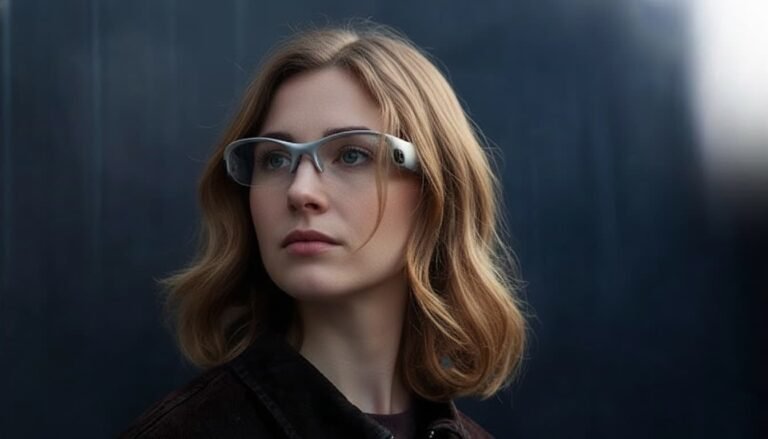
The Meta Ray-Ban Display glasses look like premium eyewear rather than experimental tech. Available in two colors, black and sand, they maintain the classic Ray-Ban style while hiding a significant amount of hardware inside the frame.
The biggest upgrade is the new monocular display. Instead of projecting visuals into both lenses, the display appears only in the right eye, slightly below and to the side of your central vision. It’s full color, delivers 42 pixels per degree, and reaches up to 5,000 nits of brightness — bright enough to be comfortably visible outdoors. The visuals act like a small heads-up display (HUD), available on demand and discreet enough to avoid distracting the user.
One of the major improvements compared to older prototypes is the near total elimination of light leak. On previous AR headsets, people standing nearby could clearly see when the user was viewing digital content. On the Ray-Ban Display, it is almost invisible from the outside, even in bright light.
At 69 grams, the glasses are heavier than normal eyewear but lighter than most AR devices. For non-glasses wearers, the weight is noticeable at first, but not uncomfortable.
The glasses pair with a wrist-worn neural band, which uses surface EMG sensors to detect small electrical signals in your arm and hand. This allows precise hands-free control without physical buttons.
Users can:
The text-input feature is surprisingly accurate, fast, and more reliable than earlier prototypes. Writing short sentences in the air works almost flawlessly, which could become a defining feature of future wearable computers.
The charging solution deserves special attention. The glasses come with a flexible case that can either store the glasses in a traditional layout or fold completely flat when they’re being worn. Even in its compact form, the case holds enough power for four additional full charges. It is one of the most convenient charging accessories among wearable devices today.
Meta has sold Ray-Ban smart glasses for years, primarily used for hands-free POV video recording. The new model still supports voice control, AI assistance, and music playback — but the addition of the display greatly expands what users can do without taking out a phone.
Here are the biggest use-case improvements:
Users can now interact with the UI directly instead of relying only on voice commands. This makes navigation faster and more private.
You can see the photo or video frame in the display before capturing it. This makes composition easier and prevents misaligned shots, especially during POV filming.
Messages appear directly on the display. Video calls show the caller’s image in the HUD, while the other person sees a POV video feed from your glasses. This creates a unique communication style, especially useful for hands-free situations.
This is one of the most practical features. The glasses provide turn-by-turn directions with a rotating map that aligns with your head direction. For users with poor directional awareness, this can be extremely helpful when walking through cities.
The glasses use beamforming microphones to isolate the voice in front of you and generate live subtitles in your field of view. For conversations in another language, the system can translate speech in real time.
This could be one of the most powerful accessibility features Meta has ever introduced.
Because the ecosystem is tightly controlled, all apps on the glasses are first-party Meta apps:
Third-party support is not available at launch, and there is no app store yet. Meta says it will arrive later, but for now the system is closed.
The one exception is music playback, which works through a partnership with Spotify.
Battery life varies depending on how often the display is used, but the glasses can comfortably last through a day of mixed activity. With the charging case providing multiple recharges, total endurance is well above most wearable devices.
Performance across all features — text input, navigation, subtitles, and camera functions — feels fast and responsive, especially considering this is a first-generation consumer AR display from Meta.
Like all Meta hardware, privacy remains an important topic. The glasses rely on Meta’s software, cloud processing, AI models, and messaging apps. Users who already use Meta products may feel more comfortable, but privacy-focused users may want to review Meta’s data policies carefully before buying.
The Meta Ray-Ban Display glasses are priced at $800, which is costly but still lower than many expected for this level of technology. It is comparable to a flagship smartphone and significantly cheaper than many AR headsets on the market.
Meta may even be subsidizing the hardware to encourage adoption.
The Meta Ray-Ban Display smart glasses are a major milestone in consumer AR. In less than a year, Meta has transitioned from an impressive but impractical prototype to a polished, lightweight pair of glasses with practical real-world features. The display is bright and useful, the neural controls are shockingly accurate, and the integration of navigation, subtitles, messaging, and photography creates a device that genuinely feels futuristic.
While smartphone dependency still exists and app support is currently limited, these glasses represent a meaningful step toward a new category of wearable technology — one that blends convenience with hands-free computing.
For now, they are the most advanced smart glasses with a display that you can actually buy, and they set a strong foundation for what the next few years of consumer AR could look like.
If Meta continues improving this rapidly, the future of everyday wearable computing may arrive sooner than expected.